Road congestion
Introduction
Value proposition
Can contribute to more efficient use of transport capacity
More resilient, sustainable and efficient transport system
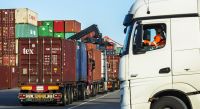
The port can take measures aimed at addressing congestion that primarily contribute to a more efficient use of transport capacity, the spreading of traffic peaks and improved reliability of logistics chains. Tackling road congestion can contribute to traffic safety, lower emissions during peak hours, higher productivity of trucks and it may improve driver satisfaction. Overall, reducing congestion within port logistics processes supports a more resilient, sustainable and efficient port transport system while delivering cost and reliability benefits for logistics operators.
Port applicability
Groups of innovations
Off-peak distribution
Distributing transport assignments more evenly throughout the day.
Fewer empty and containerless runs
by (direct) reloading of containers at terminals. This increases the efficiency, resulting in less trips that are needed for the same volume of transport.
Dynamic port planning
The optimal coordination between demand (truck handling) and supply (terminal handling capacity) by real-time data nd continuous updates by the stakeholders. This reduces peaks at access roads. Other subjects such as modal shift and autonomous driving may also help with reducing road congestion, but are outside of the scope of this factsheet.
Impact
| Impact | Level | Remark |
|---|---|---|
| GHG emissions | Limited impact | According to MAGPIE WP4, while the annual CO2 reductions of off-peak distribution are modest (ca. 1%), the emissions during peak hours are reduced up to 30%. Fewer containerless runs and dynamic port planning may reduce the number of trucks driving in the port area, reducing pollutant emissions. |
| Safety | Limited impact | Reducing the number of vehicles operating at the same time may improve road safety. |
| Port city impact | Medium impact | Although road congestion is mainly caused by passenger traffic, reducing freight transport during the busiest times of the day can improve the liveability in port cities by reducing congestion, noise and air pollution. |
| Costs | No impact | Possibility to reduce costs through more efficient execution of transport assignments, increased loading rates and a reduction in empty runs. On the other hand, shifting to off-peak operations may require additional pay for drivers, increasing cost. |
Port characteristics
How to implement?
- Step 1
Identify and engage stakeholders
- Step 2
Define KPIs and establish baseline measurements
- Step 3
Collect and analyze traffic data
- Step 4
Pilot off-peak operations and monitor results
- Step 5
Use dashboards to visualize insights
- Step 6
Scale up succesful practices
Timeline
.png/177c43eb8d707ca4394fa38a7ffb6a28/road-congestion-timeline-(1).png)
What should a port do in the next 3 years?
Investment overview
Stakeholder overview
.png/fdde935d8b2786358047b3915f3aec2e/road-congestion-stakeholder-overview-(1).png)
Knowledge base
- MAGPIE Spreading Road Traffic Demo: /products/spreading-road-traffic (opens in new tab)
- Port of Rotterdam, From challenges to continuity: www.portofrotterdam.com/sites/default/files/2025-05/whitepaper-raod-transport.pdf (opens in new tab)
- Modal shift: /factsheets/modal-shift (opens in new tab)
- Autonomous driving: /factsheets/autonomous-driving (opens in new tab)