Back to roadmapBack to list

Width of tracks

Standard width of tracks access (technically called track gauge) can strengthen a port’s rail connectivity within the European network.
Transport efficiencyTrains

Introduction

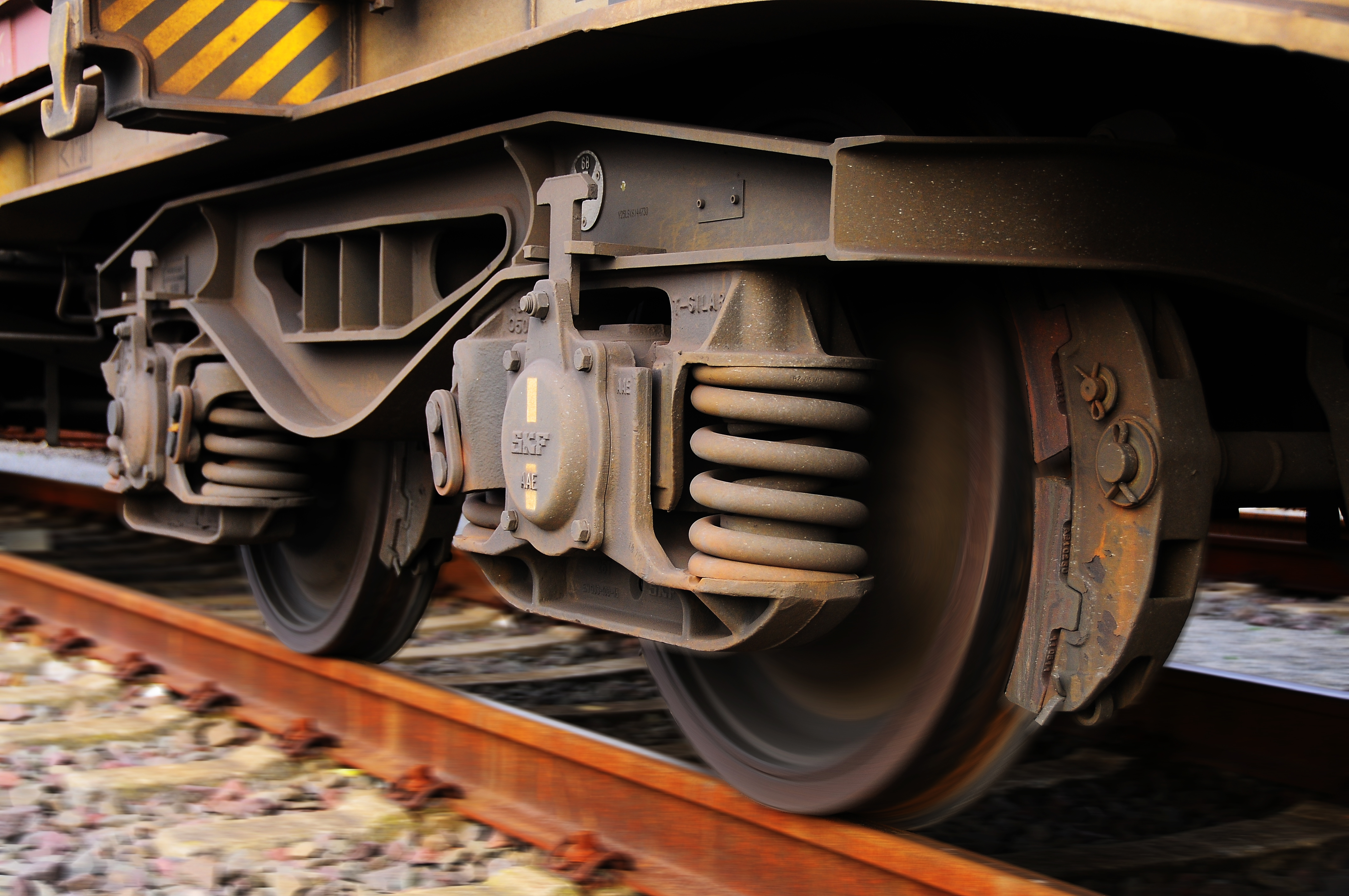
Width of tracks, technically called track gauge is the distance between the inner faces of the two rails. Most European railways use the 1,435 mm standard gauge. Other networks use wider or narrower gauges, including 1,520/1,524 mm and 1,668 mm. A break of gauge prevents standard rolling stock (wagons and locomotives) from continuing directly and may require transshipment, bogie exchange or variable-gauge equipment. Track gauge should not be confused with loading gauge, which defines the permitted height and width of trains and cargo.

Value proposition

  • Improved rail interoperability between ports, hinterland terminals and international corridors

  • Reduce transshipment, dwell time, handling costs and cargo damage at gauge borders

  • Stregthen a port's rail connectivity within the European network

The value of having a standard track width depends on the complete corridor because changing only port tracks does not remove a break of gauge elsewhere. Gauge conversion to a standard width therefore requires long-term coordination and a strong traffic case.

Port applicability

The topic is most relevant to ports connected to non-standard-gauge networks or to corridors where different gauges meet. Baltic, Iberian, Finnish ports may face different conditions from ports already connected to 1,435 mm networks. In Eastern Europe, a major break of gauge exists between Poland and the Baltic States, whose existing networks mainly use the 1,520 mm gauge. Rail Baltica addresses this barrier by developing a new 1,435 mm standard-gauge railway through Lithuania, Latvia and Estonia, connected to Poland and the wider European rail network. Ports handling international rail freight, military mobility or high intermodal volumes face the greatest interoperability impact. Ports fully embedded in one domestic gauge may have little local need to convert unless European corridor policy or new cross-border flows justify it.

Groups of innovations

  • Standard-gauge conversions

    Replace or reposition rails, switches and related infrastructure to support 1,435 mm rolling stock. Timing: long term; Pros: enables direct interoperability; Cons: high cost and major service disruption.

  • Dual-gauge track

    Install a third or fourth rail so rolling stock of two gauges can share part of a route. Could also be a smooth transition to the total transfer of 1,435 mm tracks. Timing: medium to long term; Pros: supports transition and mixed networks; Cons: complex switches, maintenance and platform interfaces.

  • Gauge-change facilities

    Use variable-gauge wheelsets or exchange bogies at the network boundary. Timing: available for selected fleets; Pros: reduces cargo handling; Cons: specialised rolling stock and facilities are required.

  • Cargo transshipment

    Transfer containers or bulk cargo between trains of different gauges. Timing: available; Pros: flexible and proven; Cons: adds dwell time, cost and handling risk.

  • Interoperable terminal design

    Provide compatible track layouts, cranes, storage and train paths for both networks. Timing: medium term; Pros: preserves port access during transition; Cons: requires space and operational coordination.

  • Corridor-level planning

    Coordinate gauge, electrification, signallingsignaling, axle load and loading gauge as one interoperability package. Timing: immediate; Pros: avoids isolated investment; Cons: depends on several infrastructure managers and countries.

Impact

Impact level per aspect
ImpactLevelRemark
Hinterland connectivityVery large impact
Compatible gauge supports direct international rail services.
Port efficiencyLarge impact
Reduces transshipment and border dwell time.
Rail competitivenessLarge impact
Lowers friction in long-distance freight chains.
Spatial impactNegative impact
Dual-gauge tracks and transfer terminals may require extra space.
Investment constsNegative impact
Conversion of active infrastructure can be expensive.
International cooperationVery large impact
Benefits depend on coordinated corridor implementation.

Port characteristics

Ports that should prioritise track-gauge interoperability are ports located at a break of gauge or connected to corridors planned for conversion. International container, bulk and strategic freight ports may gain most from direct access to the 1,435 mm network. Ports with high and stable rail volumes are better able to justify major infrastructure investment. Ports already using standard gauge should can focus on other constraints of improving the efficiency of train transport, such as loading gauge, axle load, train length, electrification and signalling. The strongest candidates are ports where infrastructure managers, terminals, railway undertakings and neighbouring countries can develop one corridor plan together.

Barriers and enablers

Enablers

  • Standards & regulationsEnabler

    The revised TEN-T framework supports convergence towards the 1,435 mm European standard gauge.

  • TechnologyEnabler

    Dual gauge, transshipment and gauge-changing solutions are technically available.

  • DirectionalityEnabler

    EU interoperability, resilience and rail-freight objectives create policy momentum.

Barriers

  • EconomicBarrier

    Conversion costs are high and benefits depend on international freight demand.

  • InfrastructureBarrier

    Tracks, switches, yards, terminals and maintenance facilities may all require adaptation.

  • Stakeholder interactionBarrier

    Implementation requires corridor-wide coordination across countries and infrastructure managers.

How to implement?

  1. Step 1

    Identify gauges, interfaces, and corridor bottlenecks

    Map network

  2. Step 2

    Estimate international flows and operational benefits

    Assess demand

  3. Step 3

    Compare conversion, dual gauge, gauge change and transshipment

    Select solution

  4. Step 4

    Agree standards, phasing, and responsibilities with partners

    Align corridor

  5. Step 5

    Test one route, terminal, or gauge-change operation

    Pilot interface

  6. Step 6

    Integrate the solution into regular corridor operations

    Scale network

Timeline

The arrow below represents the expected development of the TRL of compatible track gauge.
* Technical Readiness Level

What should a port do in the next 3 years?

Implementation must start at corridor level, not by with the port in isolation. A port should need firstly determine whether track gauge is the real bottleneck or whether train length, loading gauge, signalling or electrification is more restrictive in an efficient trainproduct. A joint feasibility study can then compare conversion, dual gauge (like in the Barcelona port) and transfer solutions. Pilot interfaces can bewill available around 2030, wider corridor deployment may are expected to develop by 2040, and full network integration aligns with the TEN-T horizon towards 2050. Ports should identify where freight is transferred or delayed and quantify potential new flows. The port should thencan work with infrastructure managers, terminal operators and railway undertakings on a corridor feasibility study. Planned rail renewals should preserve future conversion or dual-gauge options. No major investment should behave to be made before the end-to-end operational benefit is demonstrated.

Investment overview

CAPEX: Investments may include track reconstruction, additional rails, switches, signalling, electrification, drainage and adapted maintenance facilities. Gauge-change or transshipment terminals rrequire specialised equipment and storage space. Investment requirements Costs rise substantially when busy yards, bridges, tunnels or platforms must also be modified. OPEX: Recurring costs for rail maintenance include inspection, maintenance of complex switches, staff training, traffic management and operation of transfer or gauge-change facilities. Dual-gauge infrastructure may be more maintenance-intensivee. Direct trains can reduce handling and dwell costs after sufficient traffic is established.

Stakeholder overview

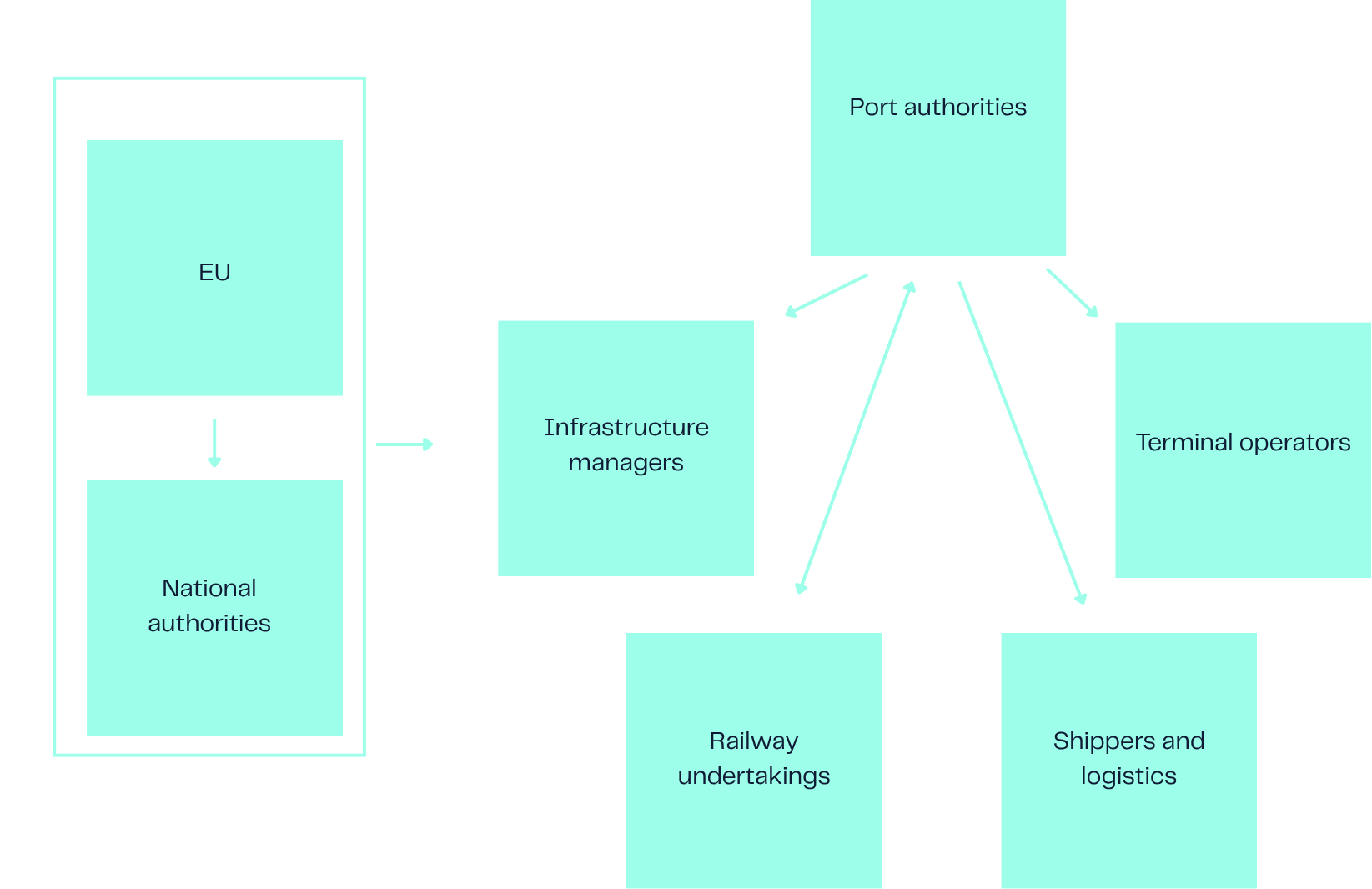
Port authorities coordinate land use, port strategy and terminal interests. Rail infrastructure managers lead technical design, construction and network capacity. It depends on the country whether a port authority takes up this role as well. Terminal operators manage cargo interfaces and local track use. Railway undertakings and wagon owners determine rolling-stock compatibility and commercial demand. National transport ministries, the European Commission and European corridor coordinators support policy and funding. ERA, safety authorities and conformity-assessment bodies support interoperability and approval. Below is an overview of the required involved stakeholders.
Mint stakeholders are essential, grey stakeholders are enabling

Knowledge base