MAGPIE Synculator tool
Synchromodality describes dynamic, real-time mode decisions, allowing transport systems to respond flexibly to disruptions and changing conditions.
Introduction
Value proposition
Real time data
Dynamic response
Strengthening supply chain resilience
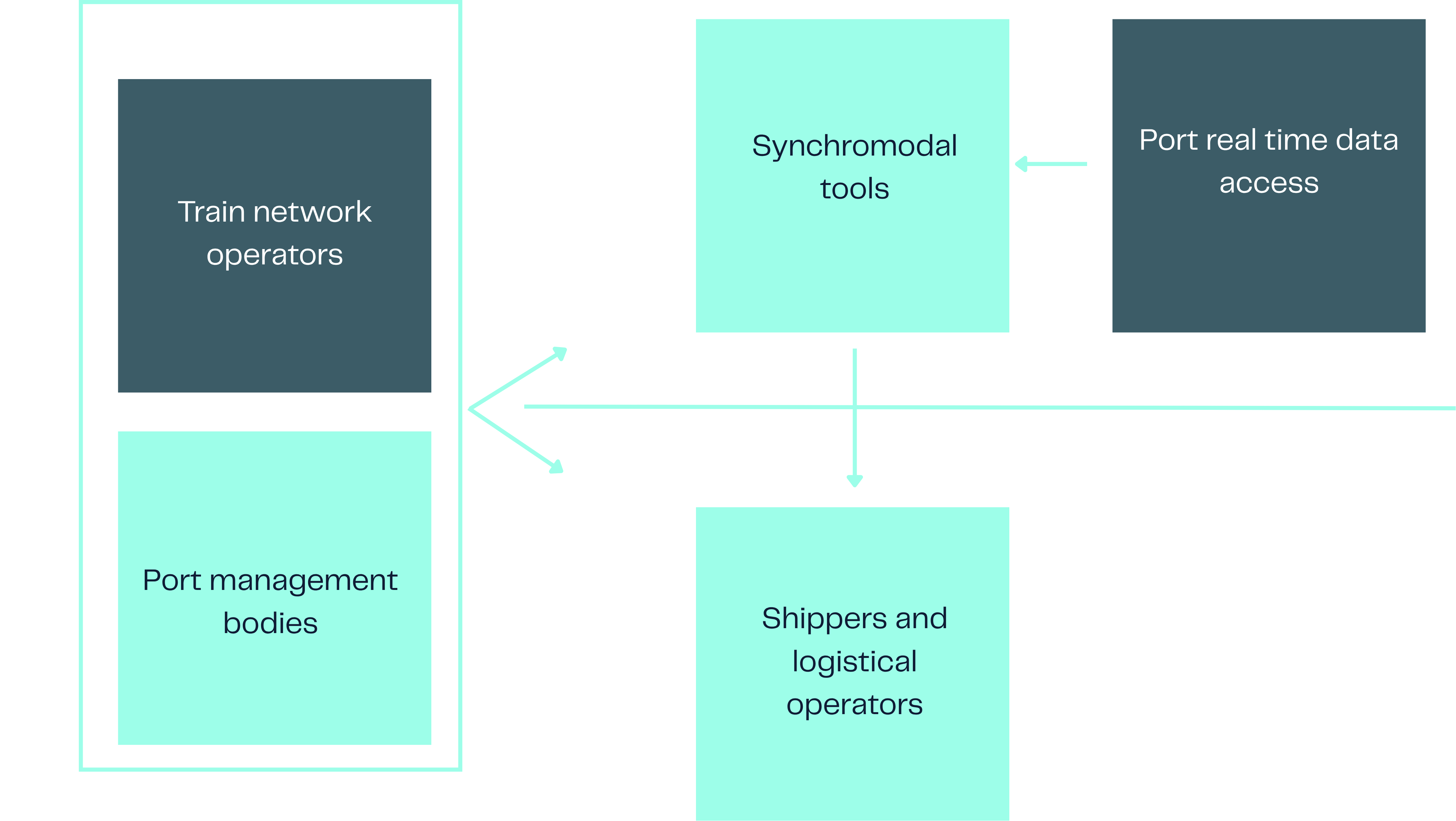
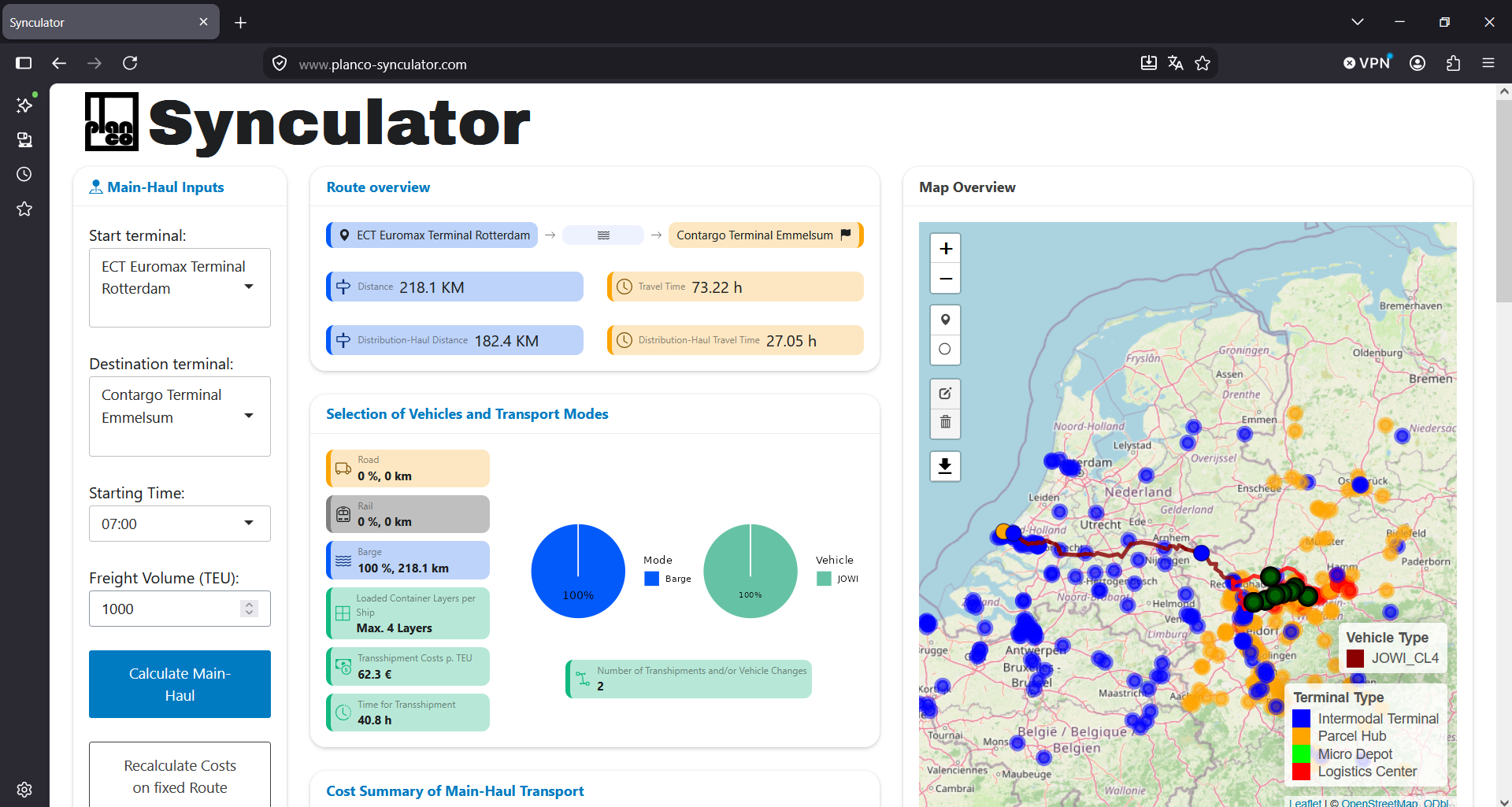
By integrating real-time data, the PLANCO Synculator enables transport planners to respond dynamically to disruptions such as low water levels or fuel price shocks, thereby strengthening the resilience of the supply chain. Depending on the selected route, the tool provides decision options of alternative transport modes and chains, helping to reduce road transport and supporting a shift towards more sustainable options. Moreover, the tool allows possible applications to be modelled and explored, e.g. the Logistic Model for sustainable hinterland networks and hubs (see MAGPIE D6.7) via the PLANCO-Synculator Web-Tool, which provides an alternative approach to integrate IWT into B2C transport chains.
Port applicability
Groups of innovations
Synchromodality as a dynamic logistics concept
Real-time data, such as fuel prices, road congestion, water-levels, can be used to identify trends and disruptions. This enables transport planners to respond flexibly through real-time mode switching taking into account several alternative transport options and routes.
Impact
| Impact | Level | Remark |
|---|---|---|
| Urban mobility | Limited impact | Synchromodal transport choices can contribute to reduce road transport by facilitating shifts to rail and barge. Effects on urban mobility indirect, as the tool primarily adresses hinterland transport. |
| Noise reduction | Limited impact | Reduced road-related noise through potential modal shifts. |
| GHG emissions | Medium impact | Reduced emissions through more sustainable mode choices, when possible. |
Port characteristics
How to implement?
- Step 1
Identification of business models
- Step 2
Provision of real time data access
- Step 3
Stakeholder involvement
Timeline

What should a port do in the next 3 years?
Investment overview
Stakeholder overview